



THE TATTOO PROCESS
The process of creating a large-scale ornamental and geometric tattoo is a detailed and meticulous journey that often requires several sessions. This type of work demands precision, planning, and a keen understanding of the client’s body structure to ensure that the tattoo flows harmoniously. Here’s an overview of the typical process:
CONSULTATION AND PLANNING:
- Initial Consultation: The artist and client discuss the concept, placement, size, and style. For large-scale geometric and ornamental tattoos, understanding the client’s vision and preferences is crucial.
- Body Mapping: The artist will often take measurements or photographs of the client’s body to map out how the design will fit and move with the body’s natural contours.
- Design Creation: Using reference points from the body, the artist will create a custom design, combining ornamental elements (e.g., filigree, mandalas) and geometric patterns (e.g., tessellations, sacred geometry).
STENCIL AND PLACEMENT:
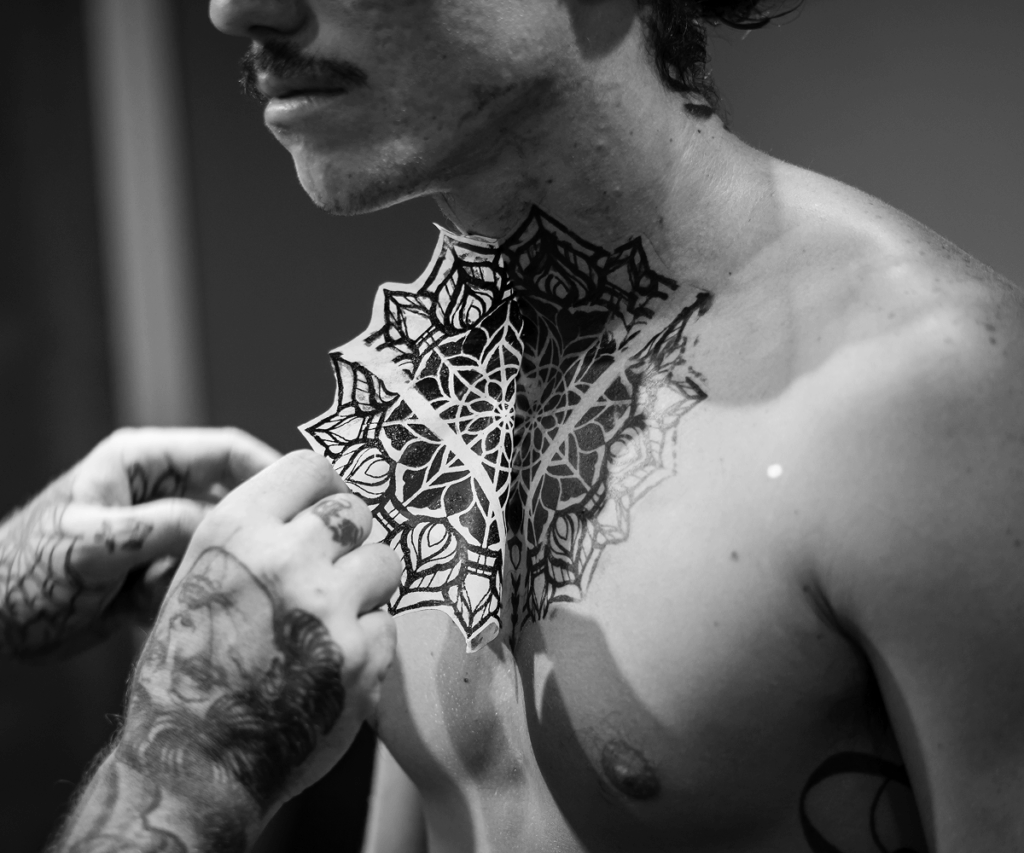
- Once the design is finalized, the artist creates a stencil using either hand-drawing techniques or digital design software.
- The stencil is carefully aligned and applied to the skin, ensuring that the design matches the body’s flow and symmetry. Given the complexity, aligning large-scale geometric patterns accurately is one of the most challenging aspects.
- The artist might apply only a portion of the stencil for each session, focusing on smaller sections at a time.
OUTLINING:
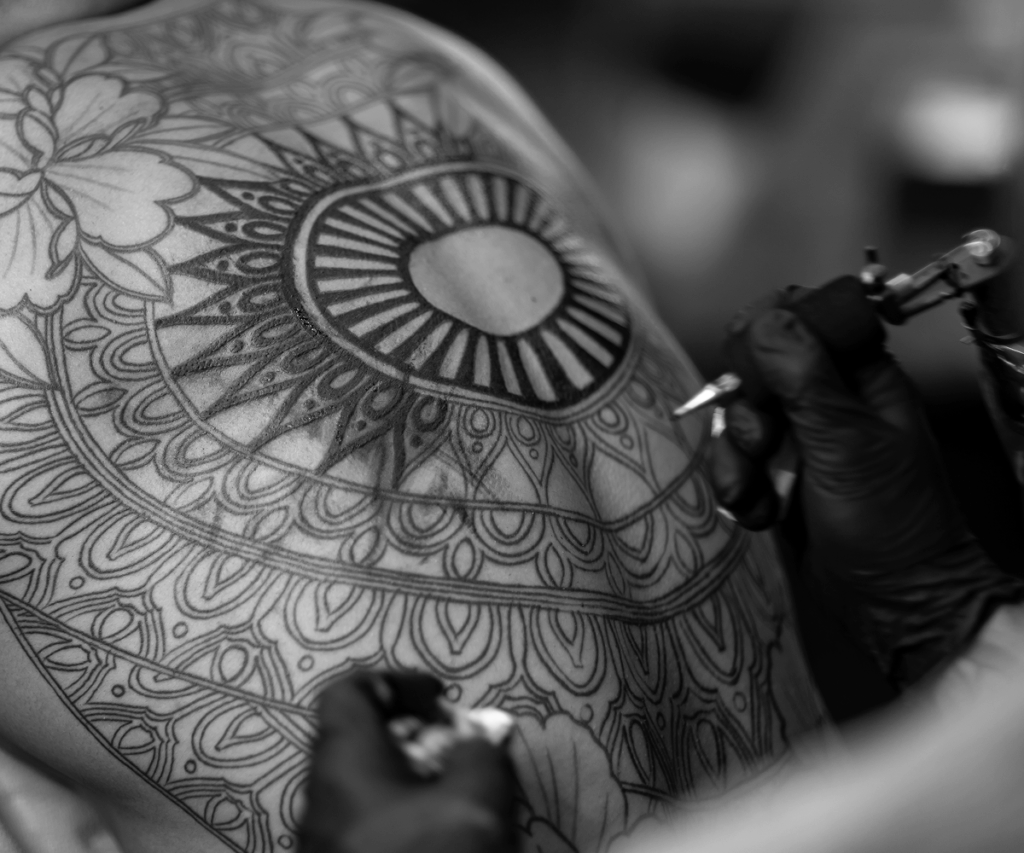
- Precision is Key: For geometric and ornamental styles, crisp, clean lines are essential. The artist will start by outlining the primary shapes, patterns, and structural elements, paying special attention to symmetry and line weight.
- This stage can take multiple sessions depending on the tattoo’s size and complexity, as large pieces often need to be broken down into manageable parts.
SHADING AND DETAILING:
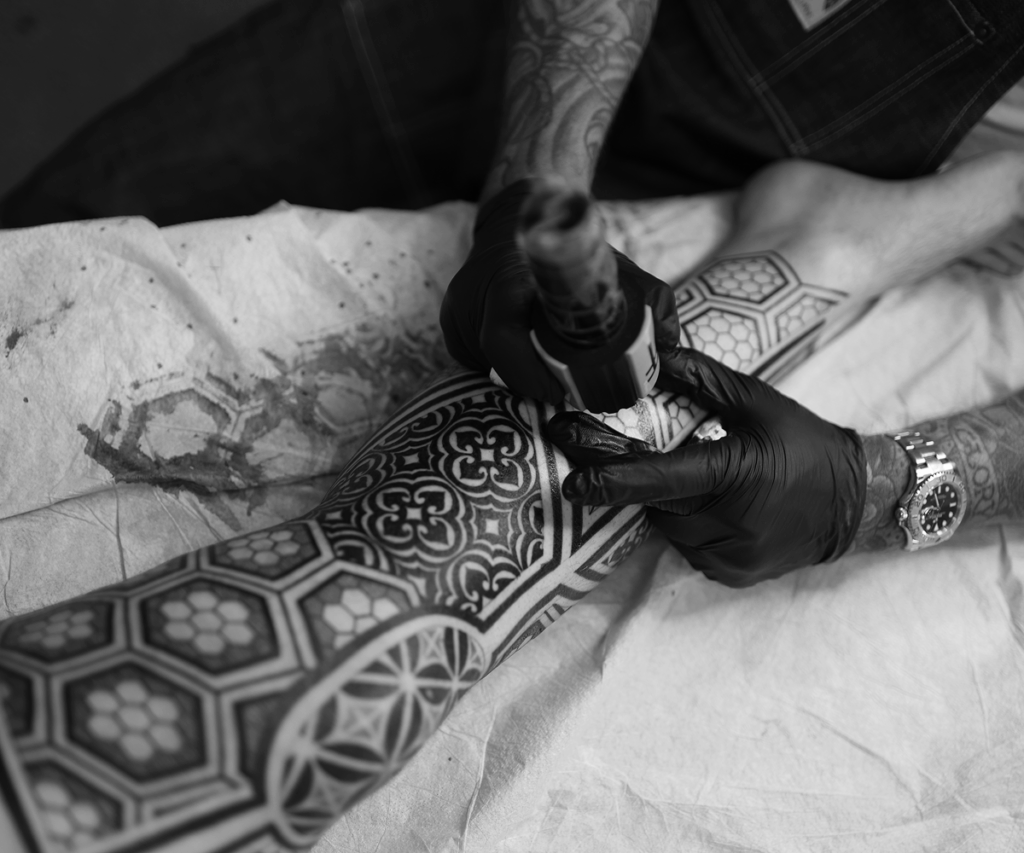
- After outlining, the artist will add shading, dot-work, and detailed line-work to create depth and dimension. This can include stippling, gradient shading, and intricate patterns within the larger framework.
- The process requires extreme precision and patience, as even small variations can disrupt the flow of geometric patterns.
REPEATING AND LAYERING:
- Geometric and ornamental tattoos often involve repeated patterns, interlocking shapes, and layered designs. The artist will build up the piece gradually, making sure that all patterns align seamlessly.
- This step is crucial in creating the illusion of three-dimensionality and a cohesive look across a large area.
HEALING AND REVIEWING:
- The tattoo is completed in stages, with each session requiring a few weeks of healing time before moving on to the next stage. This is particularly important for large areas like sleeves, back pieces, or chest designs.
- Once all the sessions are done, a final touch-up session may be scheduled to refine details, reinforce lines, or adjust any areas that didn’t heal perfectly.
AFTERCARE AND MAINTENANCE:
- Given the intricacy of ornamental and geometric tattoos, proper aftercare is essential to maintain crisp lines and detailed patterns. This includes keeping the area clean, moisturized, and protected from sun exposure during the healing process.
- Over time, some geometric designs may require periodic touch-ups to keep the lines sharp.
CONSIDERATIONS FOR LARGE-SCALE WORK:
- Time Investment: Large ornamental and geometric tattoos often take multiple sessions, sometimes spanning months or years
- Pain Management: Due to the repetitive line-work and dens e patterns, these tattoos can be more painful, especially on sensitive areas.
ARTIST SELECTION:
Thank you for choosing Simon as your artist and I look forward to going on this journey together!
This entire process requires patience, commitment, and collaboration between the artist and client to ensure a stunning, harmonious piece that complements the body’s natural form.